

Blog
How to Get EU Citizenship Legally: Investment and Other Routes

Can You Buy EU Citizenship?
Many people search online for “how to buy EU citizenship” or “EU citizenship by investment.” However, EU citizenship can simply be purchased.
For more information on how to apply for eu passport legally, contact us
email: contact@officialdocssupport.com
whatsapp: +1(672)2050601
Citizenship is granted by individual countries according to their own nationality laws. While some European countries have historically offered citizenship-related investment programs, others have discontinued or restricted them. In many cases, applicants must instead qualify through residence, naturalisation, family ancestry, marriage or other legal routes.
If your goal is to become an EU citizen, understanding the available legal pathways is essential.
In this guide, we explain the main ways people may qualify for citizenship in EU countries and what you should consider before applying.
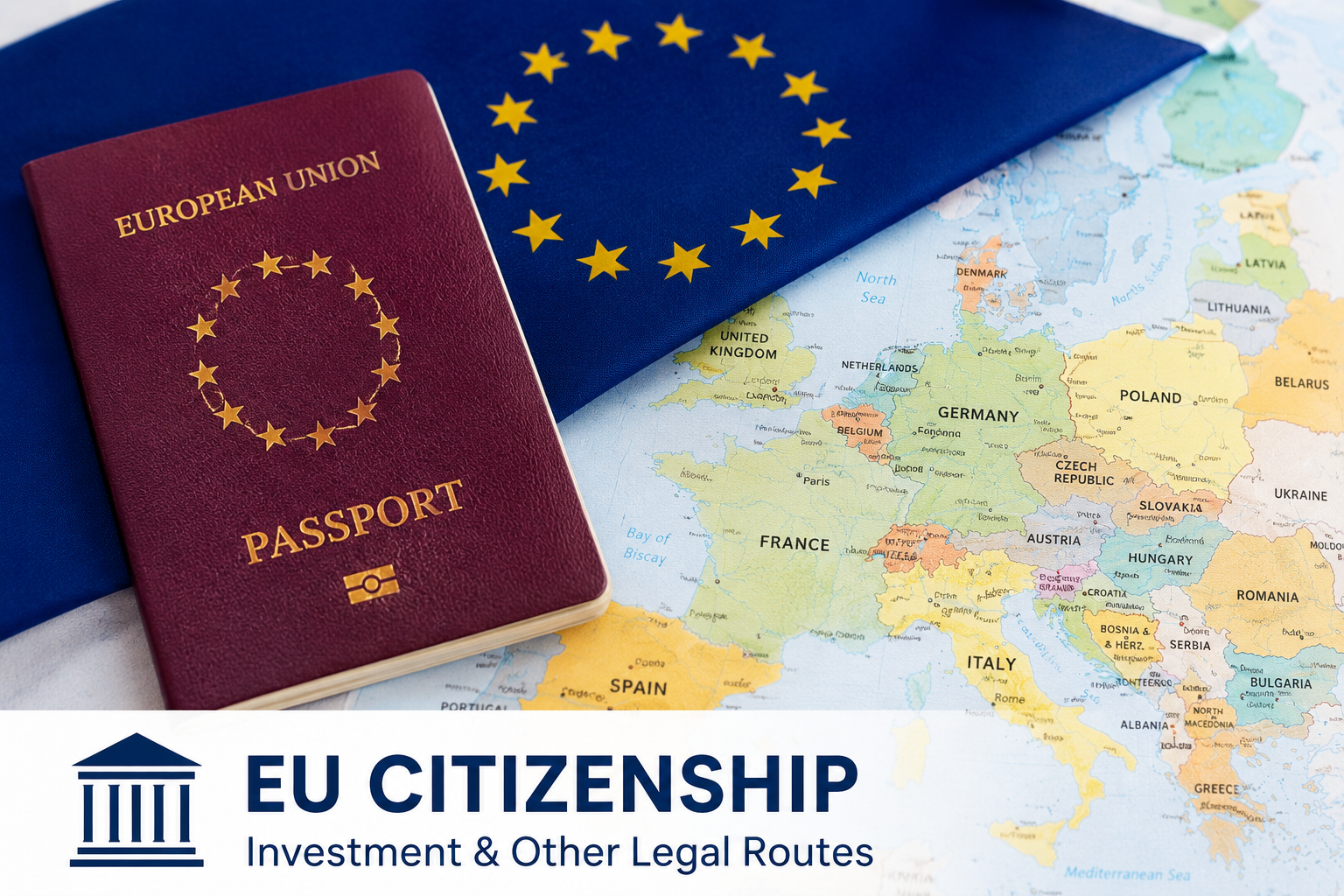
What Is EU Citizenship?
EU citizenship is automatically acquired when you become a citizen of an EU Member State.
For example, if you legally obtain citizenship of Germany, France, Italy, Spain or another EU Member State, you also become a citizen of the European Union.
EU citizenship can provide important rights, including the ability to:
- Live in other EU countries under applicable EU rules
- Work and study in other EU Member States
- Travel more easily within Europe
- Access certain rights and services available to EU citizens
- Vote in European Parliament elections and certain local elections when living in another EU country
- Benefit from consular protection from another EU Member State in certain situations
The exact rights and conditions depend on your circumstances and the relevant national and EU laws.
Main Ways to Obtain EU Citizenship
There is no single application for an “EU passport.” Instead, you normally need to qualify for citizenship of a specific EU country.
The most common routes include:
- Naturalisation after legal residence
- Citizenship by descent or ancestry
- Citizenship through marriage or family relationships
- Investment-related immigration followed by naturalisation
- Special citizenship provisions
Let’s examine each route.
1. Citizenship Through Naturalisation
Naturalisation is one of the most common legal routes to citizenship.
Generally, you first establish legal residence in an EU country and then, after meeting the country’s requirements, apply for citizenship.
Requirements can include:
- A minimum period of lawful residence
- Proof of identity
- Language proficiency
- Knowledge of the country’s society, history or constitution
- A clean or acceptable criminal record
- Proof of financial or social integration
- Compliance with immigration requirements
- A genuine connection to the country
The required residence period varies considerably between EU countries.
Therefore, you should always check the current requirements of the particular country before making plans.
2. Citizenship by Descent or Ancestry
Another potentially attractive route is citizenship by descent.
Some European countries allow people with qualifying parents, grandparents or other ancestors to claim citizenship, provided specific legal conditions are satisfied.
You may need documents such as:
- Your birth certificate
- Your parent’s birth certificate
- Your grandparent’s records
- Marriage certificates
- Immigration records
- Naturalisation records
- Proof that your ancestor held the relevant citizenship
Not everyone with European ancestry automatically qualifies.
Citizenship-by-descent laws differ significantly between countries, and some countries impose generational limits or other conditions.
3. Citizenship Through Marriage
Marriage to an EU citizen does not automatically make you an EU citizen.
However, marriage or another qualifying family relationship may provide a pathway to residence and, in some countries, eventually citizenship.
Depending on the country, applicants may have to demonstrate:
- A legally recognised marriage or partnership
- A genuine family relationship
- A specified period of marriage or residence
- Language or integration requirements
- Good legal standing
- Other nationality-law requirements
The rules are country-specific, so applicants should verify the current requirements with the relevant government authority.
4. Investment and EU Citizenship
The phrase “EU citizenship by investment” is frequently used online, but it can be misleading.
EU Member States control their own citizenship laws, and investment programs can change significantly.
Some countries have offered investment-based citizenship arrangements in the past, while others have closed or changed such programs following legal, political or policy developments.
In many cases, investment can instead provide a residence permit, rather than immediate citizenship.
This distinction is extremely important.
Citizenship vs. Residency by Investment
Citizenship by investment generally refers to a legal framework in which a qualifying applicant can obtain citizenship after satisfying specified conditions, which may include an investment.
Residency by investment generally provides a residence permit. It does not automatically make the applicant a citizen.
A person who obtains residence through investment may need to live in the country for a required period and satisfy naturalisation requirements before becoming eligible for citizenship.
5. Business or Employment Routes
Some people obtain EU citizenship after establishing a long-term life in an EU country through employment or business.
For example, an individual may:
- Obtain an appropriate residence permit
- Move legally to an EU country
- Work or operate a qualifying business
- Maintain lawful residence
- Meet integration requirements
- Eventually apply for naturalisation if eligible
This is not a shortcut to citizenship, but it can provide a legitimate long-term pathway.
How Much Does EU Citizenship Cost?
There is no single price for EU citizenship.
The total cost depends on the country and the route used.
Potential expenses can include:
- Government application fees
- Residence permit fees
- Document certification
- Translation costs
- Legal or professional assistance
- Language examinations
- Travel expenses
- Investment requirements, where legally applicable
- Other administrative costs
Be extremely cautious about websites advertising an “EU passport for a fixed price.”
A legitimate citizenship process involves government authorities and clearly defined legal requirements.
Can You Get an EU Passport Without Living in Europe?
This depends on the specific citizenship route.
Some citizenship-by-descent procedures may allow eligible applicants to apply without first establishing long-term residence in Europe.
By contrast, naturalisation normally involves meeting residence requirements.
Investment-based residence also does not necessarily mean that citizenship will be granted immediately or automatically.
Therefore, anyone promising an EU passport “without residence, without requirements and guaranteed” should be treated with caution.
Which EU Country Is Easiest to Get Citizenship?
There is no universally “easiest” EU country for citizenship.
The best option depends on your circumstances, including:
- Your nationality
- Whether you have European ancestry
- Your family connections
- Your desired country of residence
- Your financial situation
- Your ability to meet language requirements
- Your employment or business situation
- Your previous immigration history
A route that is available to one applicant may not be available to another.
Documents You May Need
Although requirements differ, citizenship applications commonly require documents such as:
- Valid passport
- Birth certificate
- Marriage certificate, where applicable
- Proof of residence
- Police clearance certificates
- Proof of income or financial circumstances
- Language certificate, where required
- Tax or employment records
- Ancestry documents, for descent applications
- Certified translations
- Legalised or apostilled documents where required
Always check whether documents must be originals, certified copies, apostilled documents or officially translated versions.
EU Citizenship
be carefull of
- “Guaranteed EU passport”
- “Buy EU citizenship today”
- “European passport without documents”
- “No background checks”
- “EU passport in 30 days”
- “Secret government program”
- “100% guaranteed citizenship”
- whatsapp: +1(672)2050601
Citizenship applications involve legal procedures and government decisions.
Never submit false documents or inaccurate information to obtain immigration status or citizenship.
Fraudulent applications can lead to refusal, loss of immigration status and potentially criminal or other legal consequences.
How to Start Your EU Citizenship Journey
Before spending money, determine which legal pathway may apply to you.
Step 1: Choose the EU country
Decide which country you are interested in and examine its current nationality laws.
Step 2: Identify your eligibility
Determine whether you qualify through:
- Residence
- Ancestry
- Marriage
- Family relationships
- Employment
- Business
- Investment-related residence
- Another special provision
Step 3: Check the current requirements
Citizenship laws can change. Always verify requirements using official government information.
Step 4: Prepare your documents
Collect the necessary certificates, identification documents, proof of residence and other supporting evidence.
Step 5: Submit the appropriate application
Follow the official application process and provide truthful information.
Step 6: Complete additional requirements
Depending on the country, you may need to complete language tests, integration requirements, interviews or other procedures.
Step 7: Wait for the decision
The relevant government authority makes the final decision according to national law.
Why Professional Assistance Can Help
Citizenship and immigration procedures can involve complicated documentation and strict deadlines.
Professional assistance can help applicants:
- Understand eligibility requirements
- Identify the appropriate legal pathway
- Organise supporting documents
- Identify missing documentation
- Prepare applications correctly
- Understand government procedures
- Avoid common administrative mistakes
However, no private agent can legitimately guarantee that a government will approve a citizenship application.
Final approval and citizenship decisions remain with the relevant government authority.
Frequently Asked Questions
Can I buy EU citizenship?
There is no single EU citizenship that can simply be purchased. Citizenship is granted by individual EU Member States under their national laws. Investment may be relevant to certain immigration or nationality pathways, but availability and requirements vary.
Can I buy an EU passport?
You cannot legitimately purchase an EU passport from a private seller. An EU passport is issued by the government of an EU Member State to someone who already has the relevant citizenship.
Is EU citizenship by investment still available?
Investment-related citizenship and residence rules have changed in several European countries. Applicants should verify the current status and requirements of any program directly with the relevant government authority.
How long does it take to become an EU citizen?
There is no standard timeframe. The process depends on the country, the citizenship route, your circumstances and the time required by the relevant authorities to process the application.
Can I get EU citizenship through my grandparents?
Possibly. Some EU countries have citizenship-by-descent provisions that may extend to grandparents or earlier ancestors. Eligibility depends on the country’s nationality laws and your family’s documentation.
Does marrying an EU citizen give me citizenship?
Usually, marriage alone does not automatically grant citizenship. However, marriage may create immigration or citizenship opportunities under the laws of the relevant country.
Can an immigration professional guarantee citizenship?
No legitimate professional can guarantee a government decision. Anyone promising guaranteed citizenship should be approached with caution.
Final Thoughts
If you are searching for how to buy EU citizenship, the safest approach is to think in terms of legal eligibility rather than purchasing a passport.
Depending on your circumstances, you may have a pathway through naturalisation, ancestry, marriage, family connections, employment, business or an investment-related residence program.
Because nationality laws change, always confirm the current rules with the relevant government authority before making a financial commitment.
If you need assistance understanding the documentation and application process, professional guidance can help you prepare your application correctly while keeping the process within the law.
Important: This article provides general information and is not legal advice. Citizenship and immigration rules differ between countries and can change over time. Always verify the current requirements with the relevant government authority.